|
|
|
Black&White, an exceptional event for the town of Udine
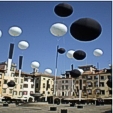 In September Udine will host an unmissable event: from 2nd to 12th September the second Black&White festival will take place in the town, with a series of not-to-be missed appointments tied by one single colour thread. This event expresses in the colours of Udine – black and white, precisely – different artistic and cultural forms in the most charming places of the town. The colour reference, which is at the basis of the festival, will be created by a selection of the most interesting names and expressions of Italian and international art, photography, cinema, journalism, food and wine tradition.
Don’t miss the art events. For the first time in Italy there will be the exhibition “Sumo”, with almost 400 photographs by the controversial and celebrated photographer Helmut Newton, whereas the works by Maurits Cornelis Escher – a Dutch artist famous for his impossible constructions – will be displayed at Casa Cavazzini; moreover, Palazzo Morpurgo will host the photo exhibition “Immagini e parole” (Images and words) with the memorable pictures by Henri Cartier-Bresson, a master of world photojournalism and of black and white. Furthermore, the photo exhibition “Libertà va cercando, ch’è si cara”, is a photographic exploration of life in prison.
The former Fish Market will be the venue of the interactive exhibition of comic strips “Supereroi in-contrastati. Tratti e personalità tra buio e luce”: some famous Italian comic-strip artists – Mario Alberti, Stefano Caselli, Giuseppe Camuncoli, Marco Checchetto – will show in real time how comic strips are created.
For cinema enthusiasts there will be two noir films every night, but also a national premiere: on 11th September the restored Metropolis by Fritz Lang will be shown, with the live performance by Boston’s Alloy Orchestra. Film enthusiasts will also have the opportunity to discover the theme “Dark ladies: the black and white stars of American cinema in the 1940s and 1950s” and enjoy eleven black and white videos that reinvent time using different media.
As far as the music events are concerned, on 4th September there will be the great return of Dalla and De Gregori and on 7th September Jin Ju’s “Diurni e notturni” (piano) at the “San Giorgio” Theatre, and on 12th September twelve pianos will play together in the open gallery of San Giovanni, accompanied by the Coro del Friuli Venezia Giulia (Friuli Venezia Giulia’s Choir) and a dance performance. The music offer of Black&White, however, will suit the most varied tastes: on Friday 10th September, in fact, an amazing dj set will enliven Piazza San Giacomo with the white party animated by a special guest.
During Black&White there will also be performances having a high visual and emotional impact with contemporary installations: from 2nd to 12th September Piazza San Giacomo will be the stage of an installation by Tomas Saraceno, whereas the Chilean Iván Navarro, who was present at the last Venice Biennale, will be the creator of an installation of neon lights in the bunkers of Piazza Primo Maggio.
Black&White will enrich Udine with unmissable “Eventi di parola” (Word events), with meetings and debates among journalists, opinion leaders, authors and writers. Various interesting meetings organised in collaboration with the Fondazione Corriere della Sera: on 8th September at 9.00 p.m. Beppe Severgnini will provide “Short  lessons on journalistic anatomy”, whereas on 9th September at 9.00 p.m Ferruccio De Bortoli will hold a conference entitled “Vero su bianco. Narrare la realtà del quotidiano” (The truth on paper. Telling everyday life). On the other hand, on 5th September the music critic Mario Luzzatto Fegiz will hold a meeting on the theme “Black and White: music between logos and myth”. Even more words at the Visionario: on 3rd September Fulvio Irace, from the “Politecnico di Milano”, will talk about “The solitude of the archi-star” and on 9th September the photographer Ferdinando Scianna will be present with the meeting “Vedo, parlo e sento in bianco e nero” (I see, speak and hear in black and white). lessons on journalistic anatomy”, whereas on 9th September at 9.00 p.m Ferruccio De Bortoli will hold a conference entitled “Vero su bianco. Narrare la realtà del quotidiano” (The truth on paper. Telling everyday life). On the other hand, on 5th September the music critic Mario Luzzatto Fegiz will hold a meeting on the theme “Black and White: music between logos and myth”. Even more words at the Visionario: on 3rd September Fulvio Irace, from the “Politecnico di Milano”, will talk about “The solitude of the archi-star” and on 9th September the photographer Ferdinando Scianna will be present with the meeting “Vedo, parlo e sento in bianco e nero” (I see, speak and hear in black and white).
For more details on the Black&White programme, please visit the website www.biancoeneroudine.com.
|
September in the mountains. Friuli Venezia Giulia’s active peaks
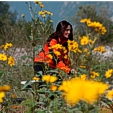 In September, too, Friuli Venezia Giulia’s mountains will suit all tastes. On a mountain bike or on a coach, on a horse, along nature trails or on the tracks of history: the region’s mountains welcome hikers of all kinds offering many activities. All accompanied by nature or mountain guides or sport instructors. The favourite destinations of hikers in September are the Tarvisio and Carnia areas.
The mountains of the Tarvisio area – Eastern Carnic Range and Julian Alps, on the border with Austria and Slovenia – are a wild and untouched paradise for nature lovers who, for example, here can find the only presence in Italy of the rare wulfenia carinthiaca. To discover these areas, Agenzia TurismoFVG (Friuli Venezia Giulia’s Tourist Board) this year proposes again many activities, different in level and theme. In September children, from 6 to 14 years, will have the chance to experience sport climbing or to go on a walk through the wood to discover the secrets of nature with two itineraries, “Looking for animal tracks” and “My first herbal”. The Tarvisio area is suitable for history enthusiasts as well, who will be led by mountain guides or history experts to the places of the First World War, on the battle front between Italy and Austria. And then nature, nature and more nature: walks for everyone or hikes for experts on the most spectacular trails of Valcanale and Canal del Ferro or “On the tracks of J. Kugy”, to the discovery of the Julian Alps, which were much loved by the mountaineer-poet Julius Kugy.
In September, active proposals in the mountains of Carnia as well, which comprises part of the 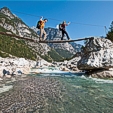 Carnic Alps and of the Friulian Dolomites on the border with Austria, among outstanding peaks, rock faces, meadows, mountain pastures, luxuriant and age-old woods. The guided activities proposed in Carnia in September are intended for hikers of all kinds. Youths will have the chance to take part in educational walks in nature or in an adventurous treasure hunt. And, to discover the mountains in an alternative way, it is possible to take a horse ride, go on a mountain bike tour in nature or do canyoning down exciting mountain streams. Or, still, more comfortable coach tours among art, history, traditions, the flavours from Carnia, visits to museums, sites of historical and artistic interest or places where the most typical products (e.g. the famous ham from Sauris) are made. Carnic culture and folklore are also dealt with by CuriosArta, a series of meetings on topics related to Carnia scheduled every week in the spa resort of Arta Terme. Carnic Alps and of the Friulian Dolomites on the border with Austria, among outstanding peaks, rock faces, meadows, mountain pastures, luxuriant and age-old woods. The guided activities proposed in Carnia in September are intended for hikers of all kinds. Youths will have the chance to take part in educational walks in nature or in an adventurous treasure hunt. And, to discover the mountains in an alternative way, it is possible to take a horse ride, go on a mountain bike tour in nature or do canyoning down exciting mountain streams. Or, still, more comfortable coach tours among art, history, traditions, the flavours from Carnia, visits to museums, sites of historical and artistic interest or places where the most typical products (e.g. the famous ham from Sauris) are made. Carnic culture and folklore are also dealt with by CuriosArta, a series of meetings on topics related to Carnia scheduled every week in the spa resort of Arta Terme.
|
In Grado to enjoy the flavours of the sea
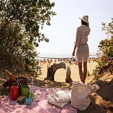 Grado is not just a labyrinth of mysterious calli (narrow streets) and a maze of canals, it is also – or mainly – a fishermen’s town where fishing has always marked the days and filled the tables with the delicacies from the Adriatic Sea, which today can still be tasted on the Sunny Island. In this famous seaside resort wine tourists will taste amazing dishes prepared using the catch of the day: the lagoon, in particular, provides every day grey mullets, gilthead breams, basses and eels as well as crustaceans and shellfish. In the calli and campielli (small squares) of the town centre the restaurants propose the best of Grado’s cuisine, which is made unique by the long tradition of recipes handed down the generations.
The most famous recipe from Grado is the “boreto a la graisàna”, which is neither a broth nor a soup, but a dish made unique by its simple ingredients and preparation, invented by the lagoon fishermen. Its origin, in fact, dates back to the period in which the fishermen, who dwelled in the casoni (typical fishermen’s huts) of the Grado lagoon, lived mainly on fishing: the boreto, in fact, was originally a poor dish cooked in an iron pan with some seed oil, whole garlic cloves and the fish sprinkled with white vinegar and black pepper. Today the boreto is the dish that characterises Grado and it is worth tasting to experience the essence of the island. Moreover, every day the sea and the lagoon provide other kinds of seafood, skilfully prepared by the local restaurants: gilthead heads, basses, eels, “schile” (shrimps), sardines, “sievoli” (grey mullets) are some of the fishes that live in the lagoon ecosystem in optimum conditions and that are cooked using the typical local recipes. The “sievoli sotto sal”, for instance, are grey mullets preserved in salt for two or three months, but they are excellent also “in savor”, a marinade prepared on the day before consumption. Moreover, a traditional preparation proposed in the restaurants of Grado is used for cooking the matan (eagle ray) that is cut in slices, which are then tied to one another with a string and put to dry in the sun. Don’t miss the “pasta con gli zottoli” (pasta with cuttlefish) and the soup “zuppa di gò” (the goby is a fish that lives on lagoon bottoms).
However, Grado is not just fishing: the surrounding area is rich in products that can be tasted together with the island’s seafood. For over two centuries, for example, the Fossalon asparagus growers have been working to improve the quality and production techniques of white asparagus, characterised by the completely white turion, of medium or large size, not stringy and with a compact head. Crossing the bridge that links Grado with the mainland, you will get to Fiumicello, a small town of the Bassa Friulana area where over a hundred peach varieties are grown: they maintain their taste and fragrance as they are picked from the tree only when they are ripe. For over fifty years this flat area, where the soil is particularly rich, has been the ideal habitat for peach trees.
All these delicacies can be matched with the wines from one of Friuli Venezia Giulia’s DOC (Denomination of Controlled Origin) areas – DOC Friuli Aquileia – that consists of the strip of land that overlooks the Grado lagoon and stretches north. The pedoclimatic conditions of this area have always been particularly suitable for vine growing, thus ensuring the ideal equilibrium conditions, the most important factor to obtain top-quality grapes that make excellent white and red wines. A meal based on seafood and local products may be ended with the island’s liqueur – called “santonego” –, which is made with sea wormwood, an herb found in the lagoon environment.
|
Munch and the Northern spirit: another great exhibition at Villa Manin of Passariano
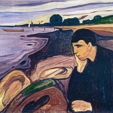 From 25th September 2010 to 6th March 2011 Friuli Venezia Giulia will host in one of its most beautiful architectural gems – Villa Manin of Passariano – the exhibition “Munch e lo spirito del Nord. Scandinavia nel secondo Ottocento” (Munch and the Northern spirit. Scandinavia in the second half of the nineteenth century) which will show visitors the Northern suggestions through Norwegian, Swedish, Finnish and Danish painting, with a special focus on Edvard Munch’s works. A great event, which confirms this region as the location of extremely important events. Agenzia TurismoFVG (Friuli Venezia Giulia’s Tourist Board) has thought about the visitors of the exhibition and has created Art&Performance, a specially conceived tourism product that allows to visit the exhibition and at the same time discover the other cultural attractions of Friuli Venezia Giulia: thanks to this offer, those who spend a night at the participating hotels of the region will receive a free ticket to the exhibition.
For the first time in Italy, the exhibition is specially dedicated to landscape, but it also deals with the theme of portrait and figure. Displaying about 130 works coming mainly from Scandinavian museums but also from other European and American museums, it is divided into five sections: the first four sections are reserved to the national schools, whereas the final section is dedicated to Edvard Munch, with 40 works – 30 paintings and 10 works on paper. Therefore, a sort of great exhibition within the exhibition, taking into consideration the beginning years and then the two decades – the last decade of the 19th century and the first of the 20th century – that marked his global fame.
Besides  Munch’s works, the exhibition proposes other works that represent painting in Norway, Sweden, Finland and Denmark in the second half of the nineteenth century, a genre of painting that represents the “Northern spirit” and that, therefore, finds its logical and unavoidable point of arrival in Munch. The Italian public will be shown the sense of time, the brightness of the summers, the deepness of the winter nights, the velvet of the moss, the white flowers under the white summer moons. Munch’s works, the exhibition proposes other works that represent painting in Norway, Sweden, Finland and Denmark in the second half of the nineteenth century, a genre of painting that represents the “Northern spirit” and that, therefore, finds its logical and unavoidable point of arrival in Munch. The Italian public will be shown the sense of time, the brightness of the summers, the deepness of the winter nights, the velvet of the moss, the white flowers under the white summer moons.
Of course, none of the main artists of that period will be absent starting, for Denmark, from Ring, Philipsen, Syberg, Gottschalk and Hammershøi, whose works will be displayed in Italy for the first time. Then, for Norway, there will be works by Nielsen, Backer, Thaulow, Krohg, Skredsvig; and then Larrsson, Nordström, Zorn, Jansson, Prince Eugen, Strindberg for Sweden; Edelfelt, Gallen-Kallela, Järnefelt, Churberg, Halonen, Thesleff for Finland.
|
Dream House, a hearty welcome close to the sea
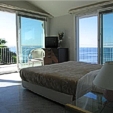 Along one of the most beautiful and panoramic roads in Europe, the coast road that leads to Trieste, nestled in the Mediterranean shrub that shades the coast, a precious location for those who are planning a stay in Trieste, either on holiday or on business: the bed&breakfast Dream House is an enchanting villa, located in a green and peaceful setting surrounded by age-old pine trees and close to the sea. The villa welcomes its guests in three large and bright double rooms, which have been recently renovated. All with private bathroom, the bedrooms are provided with all comforts: air conditioning, mini bar and a large terrace. But the greatest comfort is the amazing view you can enjoy from the villa: the rooms and terraces overlook the sea and the green garden, providing a spectacular sight. From the large windows of the rooms you can see the whole Trieste gulf up to Grado, making out the Slovenian coast and – on the clearest days – the Croatian coast as well.
At the B&B Dream House the sea is a few steps away. It is sufficient to walk down the steps that lead to the rock and gravel beach (private and free of charge) just below the villa. Along this stretch of coast the sea is clean and clear. Fish farming is practiced in the waters nearby: at night, from your room terrace, you can enjoy a picturesque show of fishermen collecting mussels on their lit-up boats. 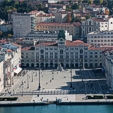 The B&B is in a strategic position also for those who want to enjoy life on the beach without giving up modern comforts, because a short way from the villa you will find equipped bathing establishments, whereas those who want to enjoy the sun even more comfortably can use the swimming pool with diving board and the solarium with shower and sun beds for summer days in total privacy. The B&B is in a strategic position also for those who want to enjoy life on the beach without giving up modern comforts, because a short way from the villa you will find equipped bathing establishments, whereas those who want to enjoy the sun even more comfortably can use the swimming pool with diving board and the solarium with shower and sun beds for summer days in total privacy.
During their stay the most active guests will have the chance to play various sports: not far from the villa there are tennis clubs, two golf courses (one in Trieste and one in Grado) and it is possible to hire boats and mountain bikes for tours.
Secluded and peaceful, the villa is a few metres away from the bus stop leading to the town. Therefore, it is easy to visit the charming city of Trieste, take a walk through its elegant centre or have a coffee sitting in one of the many historic cafés.
|
|